
Keynote Talk 1
Transforming Mobility: From Next-Visit Prediction to a Mobility Foundation Model
- Venue: Bali (in-person), Sydney (broadcast)
- Sydney Time: Thu, 4 Dec 2025 13:15 - 14:15 AEDT (UTC+11)
- Bali Time: Thu, 4 Dec 2025 10:15 - 11:15 WITA (UTC+8)
In this talk, I will present our recent work on building a transformer for next-visit prediction in human mobility data, where each visit is characterized by a location, arrival time, and departure time. A central challenge in this setting is the irregular timing of prior visits. Our key contribution is a new conditional loss function that models arrival and departure times as a continuous probability distribution. Specifically, we approximate this distribution with a Gaussian Mixture Model (GMM) and train the transformer to predict the GMM parameters, enabling robust modeling of temporal patterns.
Building on this foundation, I will demonstrate how this approach unlocks several downstream mobility tasks, including (1) filling missing visit gaps, (2) point-of-interest (POI) attribution, and (3) mobility anomaly detection. Together, these applications suggest a pathway toward developing a mobility foundation model for mobility data.
I will conclude by outlining key open challenges for realizing such a model: (1) how to represent locations in ways that allow transformers to learn effectively, including vocabulary-free or inferred-vocabulary approaches, and (2) how to represent geospatially embedded objects (GEOs) to capture richer semantics for mobility and environmental reasoning. These directions point toward a general-purpose mobility foundation model that integrates mobility, environment, and spatial context into a unified framework for downstream applications in urban computing, public health, and beyond.
Speaker
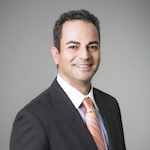
Cyrus Shahabi
University of Southern California
Cyrus Shahabi is a Professor of Computer Science, Electrical & Computer Engineering and Spatial Sciences; Helen N. and Emmett H. Jones Professor of Engineering; and the director of the Integrated Media Systems Center (IMSC) at USC’s Viterbi School of Engineering. He also served as USC's Thomas Lord Department of Computer Science from 2017 to 2022. He was co-founder of two startups, Geosemble Technologies and TallyGo, which both were acquired in July 2012 and March 2019, respectively. He received his B.S. in Computer Engineering from Sharif University of Technology in 1989 and then his M.S. and Ph.D. Degrees in Computer Science from the University of Southern California. He authored two books and more than three hundred research papers in databases, GIS, and multimedia, and he has over 14 US patents. Dr. Shahabi has received funding from several agencies such as NSF, NIJ, NASA, NIH, DARPA, AFRL, IARPA, NGA, and DHS, as well as several industries such as Chevron, Cisco, Google, HP, Intel, Microsoft, NCR, NGC, and Oracle. He chaired the founding nomination committee of ACM SIGSPATIAL (2008-2011 term) and served as the chair of ACM SIGSPATIAL for the 2017-2020 term. He was an Associate Editor of IEEE Transactions on Parallel and Distributed Systems (TPDS) from 2004 to 2009, IEEE Transactions on Knowledge and Data Engineering (TKDE) from 2010 to 2013, VLDB Journal from 2009 to 2015 and PVLDB (Vol. 16) in 2023. He is on the ACM Transactions on Spatial Algorithms and Systems (TSAS) editorial board and ACM Computers in Entertainment. He was the founding chair of the IEEE NetDB workshop and the general co-chair of SSTD’15, ACM GIS 2007, 2008, and 2009. He has been PC co-chair of several conferences, such as APWeb+WAIM’2017, BigComp’2016, MDM’2016, DASFAA 2015, IEEE MDM 2013, IEEE BigData 2013 and VLDB 2024. He regularly serves on the program committee of major conferences such as VLDB, SIGMOD, IEEE ICDE, ACM SIGKDD, and IEEE ICDM. Dr. Shahabi is a fellow of IEEE and NAI (National Academy of Inventors). He received the ACM Distinguished Scientist Award 2009, the 2003 U.S. Presidential Early Career Awards for Scientists and Engineers (PECASE), the NSF CAREER award in 2002, and the 2001 Okawa Foundation Research Award. He received the ACM SIGSPATIAL 2023 10-Year Impact Award in 2023. He was a recipient of the US Vietnam Education Foundation (VEF) faculty fellowship award in 2011 and 2012, an organizer of the 2011 National Academy of Engineering “Japan-America Frontiers of Engineering” program, an invited speaker in the 2010 National Research Council (of the National Academies) Committee on New Research Directions for the National Geospatial-Intelligence Agency, and a participant in the 2005 National Academy of Engineering “Frontiers of Engineering” program.
Keynote Talk 2
Sharing Information with Differential Privacy: A Database Perspective
- Venue: Bali (in-person), Sydney (broadcast)
- Sydney Time: Thu, 4 Dec 2025 16:00 - 17:00 AEDT (UTC+11)
- Bali Time: Thu, 4 Dec 2025 13:00 - 14:00 WITA (UTC+8)
In the digital age, the widespread collection and analysis of data pose significant privacy challenges. Differential privacy (DP) has emerged as a leading framework for releasing information while limiting risks to individuals. In this talk, we will introduce the basics of DP and explain fundamental limits on private data analysis. We will then discuss database-style mechanisms for enforcing DP, including techniques for answering queries with noise (output perturbation) and for generating differentially private synthetic data, both for single tables and relational databases with foreign keys. We will conclude with open problems and future directions.
Speaker
Xiaokui Xiao
National University of Singapore
Xiaokui Xiao is a professor at the School of Computing, National University of Singapore. His research focuses on data management and analytics, especially on data privacy and algorithms for large data. He is a co-recipient of the VLDB 2021 Best Research Paper Award, the 2022 ACM SIGMOD Research Highlight Award, and the 2024 ACM SIGMOD Test-of-Time Award. He is an IEEE fellow, ACM distinguished member, and secretary of the VLDB Endowment.
Keynote Talk 3
Managing the KV Cache Bottleneck in Large Language Model Inference
- Venue: Sydney (in-person), Bali (broadcast)
- Sydney Time: Fri, 5 Dec 2025 14:00 - 15:00 AEDT (UTC+11)
- Bali Time: Fri, 5 Dec 2025 11:00 - 12:00 WITA (UTC+8)
As large language models (LLMs) increasingly underpin mission-critical applications across industries, optimizing their inference efficiency has emerged as a critical priority. The management of the Key-Value (KV) cache, which stores the reusable computation intermediates during generation, has become the most prominent bottleneck for LLM inference optimization.
In this talk, we examine recent advancements in system-level and algorithmic advances in KV cache management, emphasizing (1) online approaches that dynamically allocate computational and memory resources during inference, and (2) offline strategies that precompute, structure, and compress the KV cache as the explicit memory for LLM. We evaluate techniques optimized for diverse operational contexts, spanning traditional chatbot serving and knowledge-enhanced question answering, and discuss corresponding architectural optimizations. Finally, we outline promising research directions to further address challenges in multi-instance inference. These advancements are crucial for enabling scalable enterprise solutions as LLMs expand into knowledge-enhanced, latency-sensitive, and high-throughput industrial applications.
Speaker
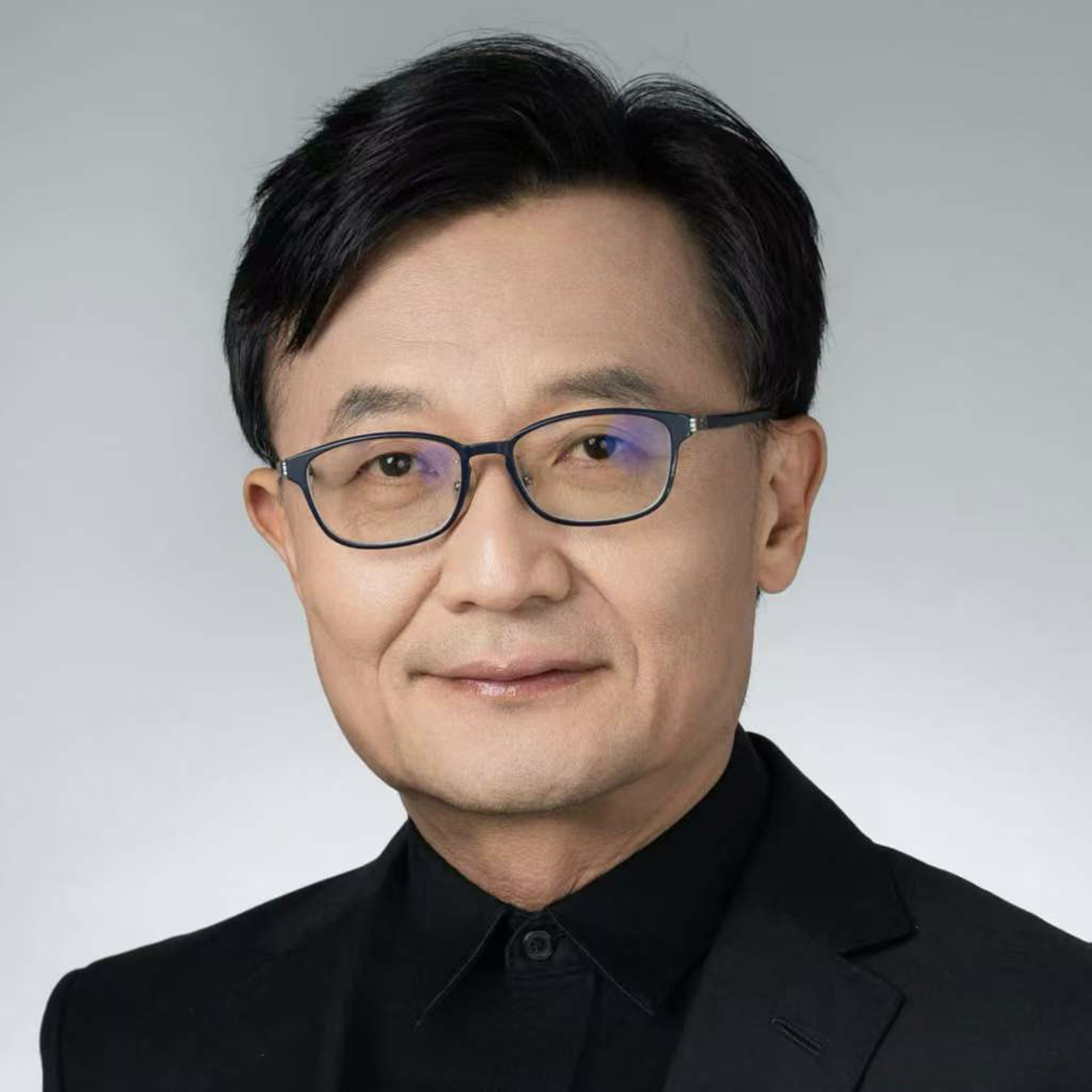
Lei Chen
Hong Kong University of Science and Technology
Lei Chen is a Chair Professor in Data Science and Analytics at HKUST (GZ), a Fellow of ACM and IEEE. Currently, he serves as the Dean of the Information Hub and the Director of the Big Data Institute at HKUST (GZ). Prof. Chen’s research spans several areas, including Data-driven AI, Big Data Analytics, the Metaverse, knowledge graphs, blockchain technology, data privacy, crowdsourcing, and spatial and temporal databases, as well as probabilistic databases. He earned his Ph.D. in Computer Science from the University of Waterloo, Canada. Prof. Chen has received several prestigious awards, including the SIGMOD Test-of-Time Award in 2015 and the Best Research Paper Award at VLDB 2022. His team’s system also won the Excellent Demonstration Award at VLDB 2014. He served as the Program Committee Co-chair for VLDB 2019 and currently holds the position of Editor-in-Chief for IEEE Transactions on Data and Knowledge Engineering. In addition, he was the General Co-Chair of VLDB 2024 and will serve as the General Co-Chair of IJCAI China 2025.
Keynote Talk 4
Unifying Conceptual, Logical and Graph Data Modeling with Principled Entity/Relationship Graphs
- Venue: Bali (in-person), Sydney (broadcast)
- Sydney Time: Fri, 5 Dec 2025 15:30 - 16:30 AEDT (UTC+11)
- Bali Time: Fri, 5 Dec 2025 12:30 - 13:30 WITA (UTC+8)
Entity/Relationship modeling is a great methodology with a fifty year track record of designing high-quality database schemata. Typically, this happens conceptually before translating the model to the logical level, such as relational databases. The talk will promote the recently introduced concept of Entity/Relationship Graphs, which establishes the first graph semantics for Entity/Relationship models. It will be demonstrated that E/R diagrams constitute a subclass of property graph schemata whose instances are E/R graphs that are designed well, referring to the absence of data redundancy and processing difficulty on target workloads. Furthermore, E/R graphs offer new opportunities in the management of entity and referential integrity. As a proof of concept, we showcase how the famous relational TPC-H benchmark performs when its schema, instances and workloads are translated into Neo4j.
Speaker
Sebastian Link
University of Auckland
Sebastian Link is a Professor of Computer Science at the University of Auckland, where he is also the Director of Data Science in the birthplace of R, the world’s most used language for statistical analysis. As the Associate Dean International for Science, Sebastian has helped establish many transnational education programmes with leading universities in China and elsewhere. His contributions to data management earned Sebastian the 2013 Chris Wallace Award, the most prestigious research award for mid-career Computer Scientists in Australasia. He was also awarded a Doctor of Science by the University of Auckland in 2015. Sebastian’s research spans data dependency theory, data profiling for which he co-founded the company DataViadotto, conceptual and logical database design for a diverse range of data models. He has published in all top database conferences and journals, is currently on the editorial board of the VLDB Journal and Information Systems, and a regular member of Senior Programme Committees such as SIGMOD, CIKM, EDBT, and ER. Sebastian has led many prestigious research grants in New Zealand to successful outcomes.