
Tutorial 1
Time-Series Foundation Models for Dynamic World Modeling: Principles and Frontiers
Time-series data describe the dynamic evolution of the real world and are widely used in transportation, energy, environment, industry, finance, and urban computing. Traditional task-specific modeling limits knowledge transfer across datasets, domains, and tasks. Time-Series Foundation Models (TSFMs), enabled by large-scale pre-training, unified representations, and zero-/few-shot adaptation, have formed a new paradigm for general-purpose temporal intelligence, expanding from forecasting to anomaly detection, multimodal analysis, question answering, and reasoning. This tutorial introduces TSFMs from the perspective of Dynamic World Modeling. Organized around the AGREE principles (Automation, Generalization, Robustness, Explainability, and Efficiency), the tutorial discusses generative and multimodal modeling, spatio-temporal applications, and temporal reasoning. Building on advanced research in human mobility analytics, spatio-temporal intelligence, and cross-modal time-series analytics, it aims to help researchers establish a complete understanding from traditional forecasting toward general-purpose temporal intelligence and Dynamic World Modeling.
Speakers
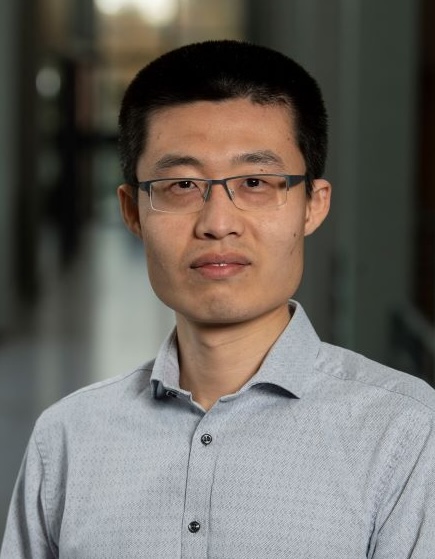
Bin Yang
East China Normal University
Bin Yang is a Chair Professor at East China Normal University, focusing on data-driven decision intelligence for time-series and spatio-temporal data. He has published over 100 papers in SIGMOD, PVLDB, ICDE, NeurIPS, and TKDE.
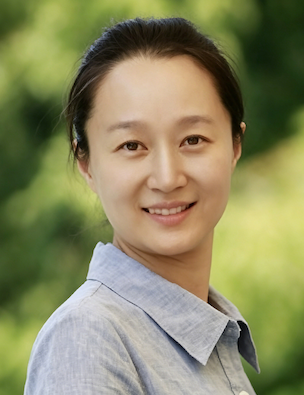
Chenjuan Guo
East China Normal University
Chenjuan Guo is a Professor at East China Normal University. Her research interests include time-series data management, automated machine learning, and Time-Series Foundation Models. She is a key contributor to the AutoCTS family and time-series Foundation models.
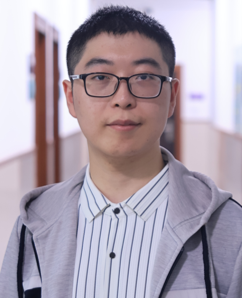
Kai Zhao
East China Normal University
Kai Zhao is a Professor at East China Normal University and gets National Excellent Young Scientists Fund. He works on data mining and machine learning for time-series, spatio-temporal data, and graph data. He has published in Nature Communications, VLDB, KDD, WWW, CVPR, ICML, and ICLR.
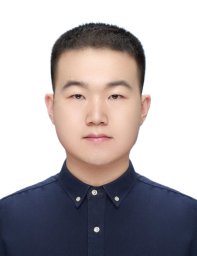
Zijian Zhang
Jilin University
Zijian Zhang is an Assistant Professor and Ph.D. supervisor at Jilin University, and an Honorary Visiting Scholar at The Chinese University of Hong Kong. His research interests include time-series analysis, recommender systems, and large language models. He has published over 30 papers in top international conferences and journals. He presented tutorials on human mobility analysis at WWW, KDD, and SSTD, attracting widespread attention in the field.
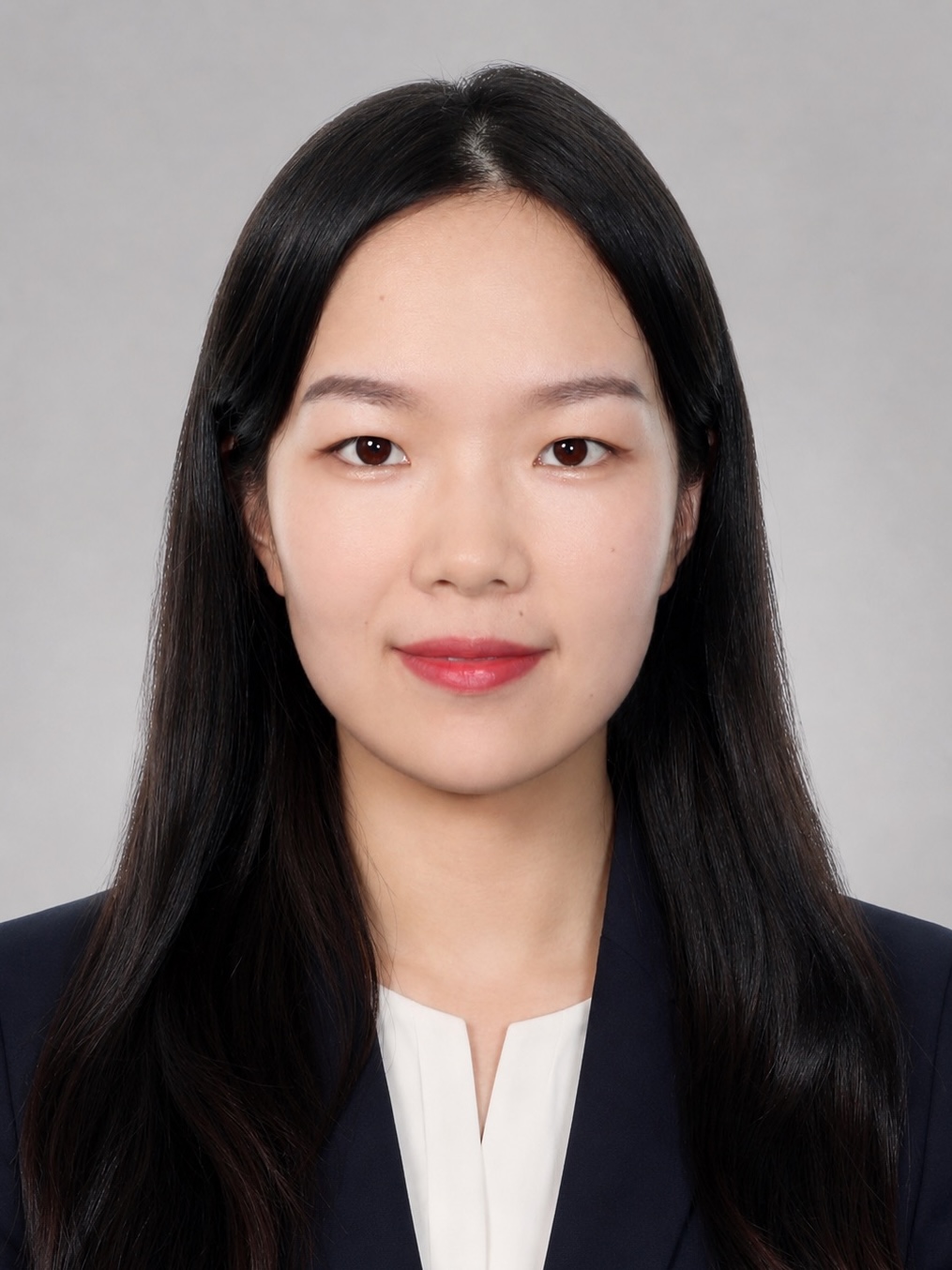
Chenxi Liu
Hong Kong Institute of Science and Innovation, CAS
Chenxi Liu is an Assistant Professor at the Hong Kong Institute of Science and Innovation, CAS. Her research focuses on time-series analysis, spatial-temporal data, multimodal learning, and AI for healthcare. She has published over 30 research papers in top international conferences and journals. Her awards include the EU-funded SoBigData Award for Diversity and Inclusion, the Danish Data Science Academy Visit Grant, and the NTU WiEST Development Grant.
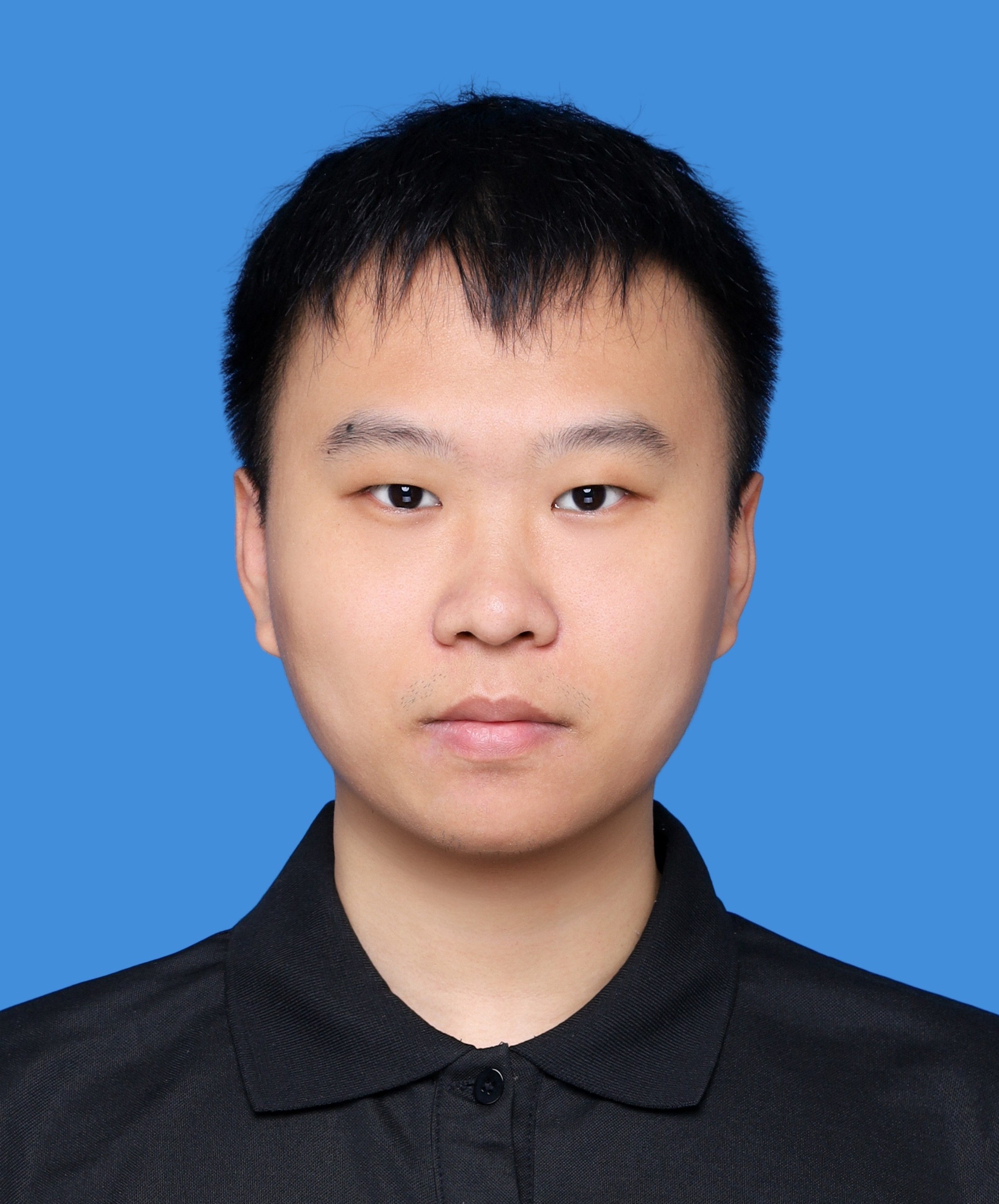
Ling Tang
East China Normal University
Ling Tang is a Ph.D. student at East China Normal University. His research focuses on the evaluation and benchmarking of time-series foundation models and the practical deployment of temporal intelligence systems.
Tutorial 2
Towards an Efficient System for Geospatial Analytics: A Hands-on Tutorial
Geospatial analytics is an important field in many application domains, including epidemiology, transportation science, criminology, and urban science. Therefore, many software packages and systems, e.g., QGIS, ArcGIS, SuperMap, and spatstat, can also support these geospatial analysis tools. However, since (1) these tools suffer from high time complexities and (2) many large-scale location datasets can be collected by domain experts nowadays, these software packages and systems are inefficient (or even infeasible) to support large-scale location datasets. As such, we conduct this tutorial to arouse the interest from those spatiotemporal data management researchers and practitioners for (i) developing efficient algorithms for these tools and (ii) using our fast QGIS plugins and our preliminary system, based on our efficient algorithms, to analyze their large-scale location datasets, respectively. This tutorial consists of four parts. In the first part, we will provide an overview of geospatial analysis tools. In the second part, we will specifically discuss efficient algorithms for kernel density visualization (one of the tools) and its variants, which can possibly be extended to support other tools. In the third part, we will provide hands-on experience for testing the efficiency of existing software packages/systems and our QGIS plugins/preliminary system (by conducting some case studies). In the fourth part, we will discuss the future trends of this topic.
Speakers

Tsz Nam Chan
Shenzhen University
Tsz Nam Chan is currently a distinguished professor in the College of Computer Science and Software Engineering at Shenzhen University. He received the PhD degree in computing and the BEng degree in electronic and information engineering from The Hong Kong Polytechnic University in 2019 and 2014, respectively. His research interests are algorithm and software development for statistical tools in GIS, spatiotemporal data management, and large-scale data visualization. He has already published nearly 60 papers in database and data mining communities (including SIGMOD, SIGKDD, VLDB, ICDE, EDBT, and TKDE). He is an IEEE senior member, an ACM member, and a recipient of spatial data intelligence rising star scholar from ACM SIGSPATIAL China in 2025.
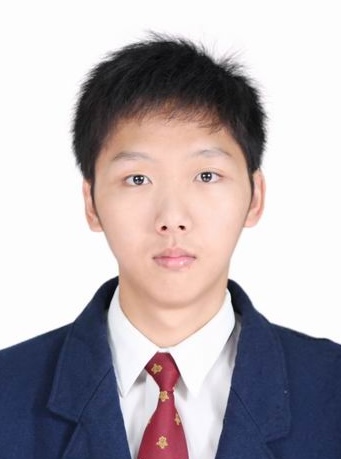
Pak Lon Ip
University of Macau
Pak Lon Ip received his bachelor's degree in Computer Science from the University of Macau in 2020 and his master's degree in Computer Science from the same university in 2023. He is currently a Ph.D. student in Computer Science at the University of Macau. His research interests include graph learning, multi-agent reinforcement learning, and geospatial data processing and visualization.
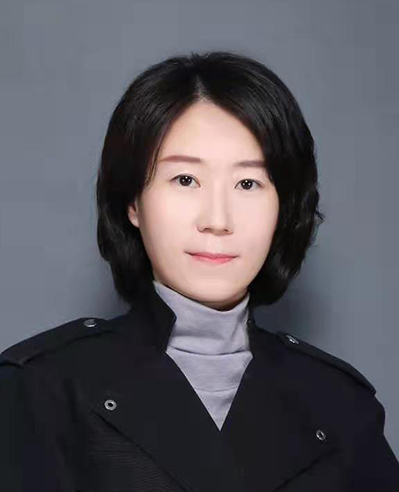
Dingming Wu
Shenzhen University
Dingming Wu received the bachelor's degree in computer science from the Huazhong University of Science and Technology, Wuhan, China, in 2005, the master's degree in computer science from Peking University, Beijing, China, in 2008, and the PhD degree in computer science from Aalborg University, Denmark, in 2011. She is associate professor with the College of Computer Science and Software Engineering, Shenzhen University, China. Her research concerns data management and analytics, query processing, and data mining.
Leong Hou U
University of Macau
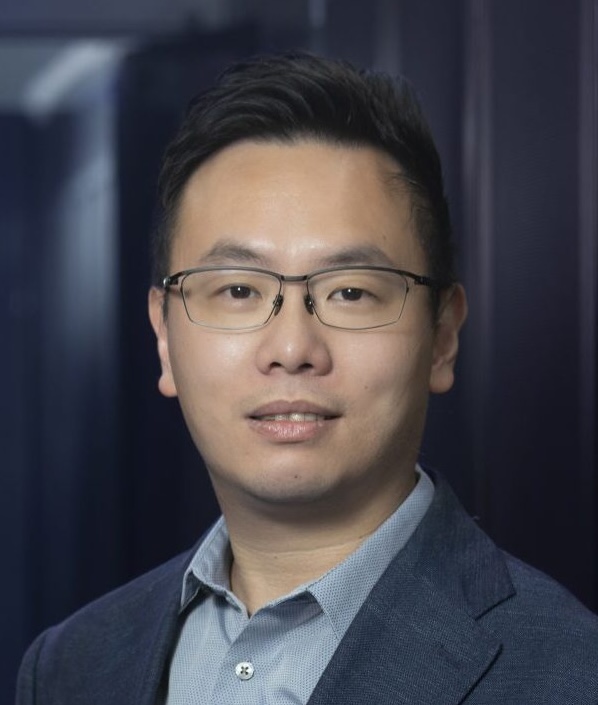
Leong Hou U received the Ph.D. degree from the University of Hong Kong. He is now an Associate Professor with the State Key Laboratory of Internet of Things for Smart City, the Department of Computer and Information Science, University of Macau. His research interests include spatio-temporal databases, large data query processing, graph learning, and reinforcement learning.
Tutorial 3
LLM-Powered Question Answering: Planning and Optimization Through a Query Processing Lens
Large language models (LLMs) are expanding the capabilities of question answering over textual and tabular data. As questions become more complex, effective QA systems require careful planning and a balance between computational cost and answer quality. This tutorial examines LLM-powered question answering through the lens of query processing. We introduce logical and physical planning as a unifying framework for understanding how questions are transformed into executable workflows. We review representative approaches and discuss how alternative execution strategies shape cost–quality trade-offs. Particular emphasis is placed on the opportunities and challenges of applying query optimization principles to LLM-powered QA. The tutorial provides researchers and practitioners with a structured perspective on system design and highlights open directions in planning and optimization.
Speakers
Ge Lee
RMIT University
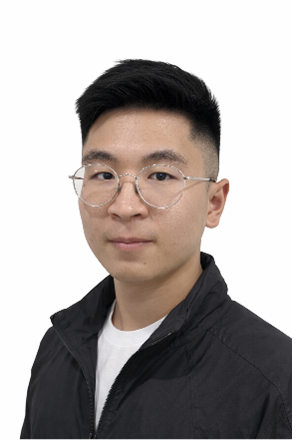
Ge Lee is a final-year PhD candidate in Computer Science at RMIT University and a visiting researcher at The University of Queensland. He also collaborates with CSIRO. His research spans data management and machine learning, with a particular interest in data systems powered by large language models. His current research explores semantic query processing over large data collections, focusing on processing cost and reliability under practical resource constraints. He has also worked on overlap discovery in tabular data, particularly for scalable retrieval and deduplication over large, uncurated table collections. His work has appeared at leading venues including SIGMOD, VLDB, and WWW.
Tingting Wang
The University of Queensland
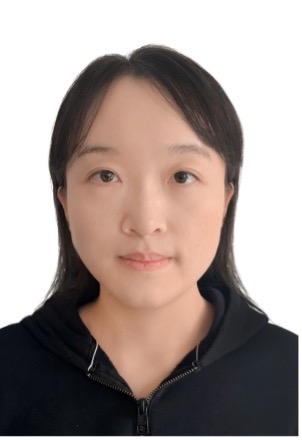
Tingting Wang is a Postdoctoral Research Fellow at The University of Queensland. She received her PhD in Computing Technologies from RMIT University in 2025. Her research lies at the intersection of data management, machine learning, and agentic systems. She develops methods and systems that make large-scale, heterogeneous data usable by AI, with an emphasis on computational efficiency and operation under explicit resource budgets. Her work has appeared in leading venues including VLDB, SIGMOD, WWW, and KDD. She has served as an Area Chair for KDD and a Senior Program Committee member for WSDM and PAKDD.
Tutorial 4
Blockchain-Enhanced Federated Learning for Trustworthy Edge Intelligence
Edge computing enables intelligent services to be deployed close to data sources, but collaborative learning across distributed edge devices and servers remains challenging due to data heterogeneity, privacy constraints, unreliable participants, and cyber threats. Federated learning provides a natural mechanism for collaborative model training without centralising raw data, yet conventional flat FL architectures are often insufficient for realistic multi-layer edge environments. This tutorial presents a unified view of blockchain-enhanced federated learning for trustworthy edge intelligence, centred on a two-layer hierarchical federated architecture that mirrors the physical organisation of edge computing systems. We progressively examine how relationships among distributed participants can be exploited to improve edge-level aggregation, and how validation, reputation, auditing, and blockchain-supported coordination can strengthen global collaboration against unreliable or malicious participants. These concepts are integrated through representative research on graph-informed federated learning and blockchain-secured hierarchical FL. The tutorial concludes with a hands-on session using the RBHFL testbed, where participants will explore hierarchical training, aggregation, validation, attack simulation, and blockchain-assisted coordination, as well as possible extensions toward future trustworthy federated edge systems.
Speakers
Jiao Yin
Victoria University
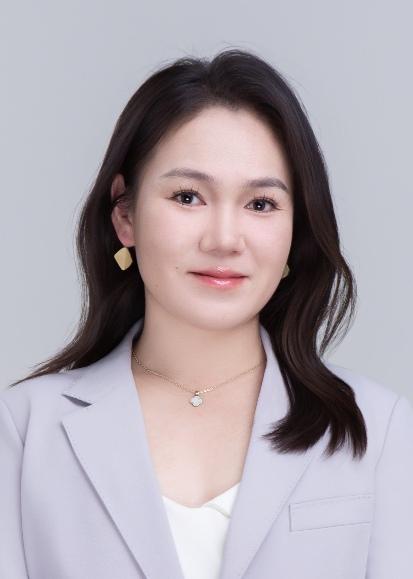
Jiao Yin is a Lecturer in Information Technology at Victoria University, Australia. She received her PhD in Computer Science from La Trobe University in 2022. Her research focuses on federated learning, deep graph learning, and secure edge computing. She leads an ARC Discovery Early Career Researcher Award (DECRA) project, while supervising HDR researchers and developing cross-institutional and industry-linked research programs. She has published extensively in high-quality journals and conferences, including TDSC, TNNLS, TKDD, ICML, and ICDM. She also led the Green AI team that received the 2026 CSIRO ON Prime Facilitator's Award.
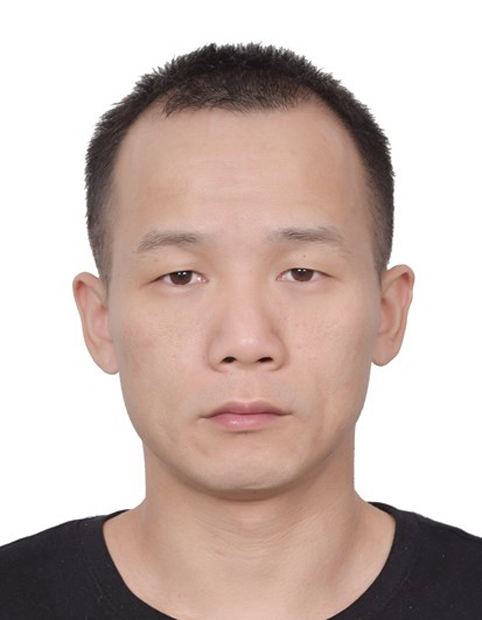
Wei Hong
Victoria University
Wei Hong is a final-year PhD candidate in Computer Science at Victoria University, Australia. He received his B.S. in Automation from Northeastern University, China and his MBA from Sun Yat-sen University, China. Before commencing his PhD, he worked for many years as an electrical engineer and project manager in the renewable wind energy industry. His doctoral research focuses on trustworthy federated learning, graph neural networks, cybersecurity, and blockchain-based distributed systems. He is the first author of RBHFL, published in TDSC, and developed the simulation testbed. His research has also appeared in areas including graph-based insider-threat detection and secure edge intelligence.